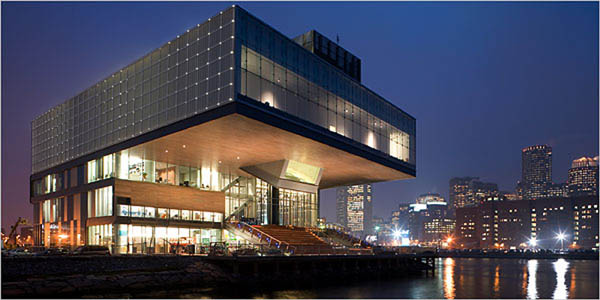
Firefly
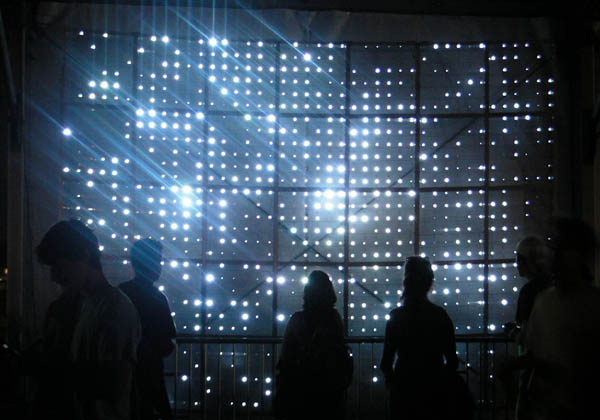
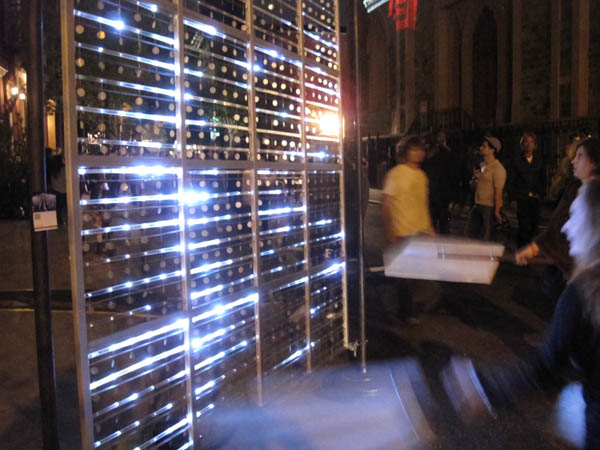
Jason Krugman Studio developed Firefly as a way to visualize the
wind in real time using LED lights. As gusts of wind strike the
surface of the piece, each LED turns on individually from the ones
around it, using its own small hand-made sensor. The result is a
sparkling display of the wind's energy converted into light.
Viewers can observe spirally eddies and chaotic waves moving over
the piece in bursts of bluish-white light.
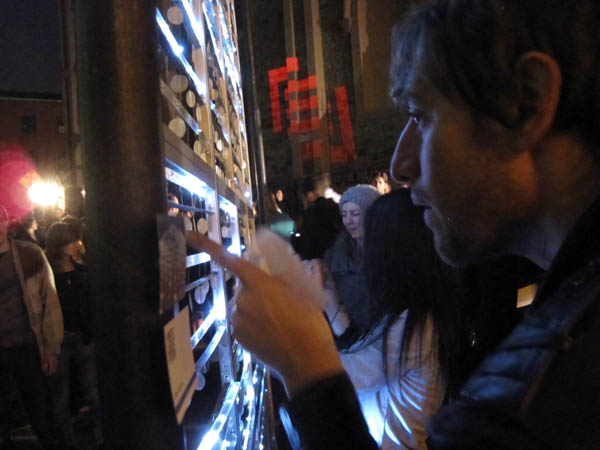
The Firefly Wind Light System revolves around a proprietary switch
for sensing the wind. Picture an electrified wind chime; as the
wind blows the metal chime into contact with the metal gong, it
closes a circuit. Firefly's LED/switch pairs do the same thing,
except on a much smaller scale. When the wind blows on their
pendulum switch, they light up.
Conceptually, this project developed out of an idea to create a
modular system that does not rely on a central decision making
hub, such as a computer. Instead, its design takes in data through
its many nodes, allowing for extremely accurate and responsive
output based on their immediate environments.
Originally developed as a Master's Thesis at NYU's Interactive
Telecommunications Program, Firefly installations have been
commissioned for several large-publc art installation around the
United States. The initial piece is currently on display at the
New York Hall of Science (pictured below).
Proposals
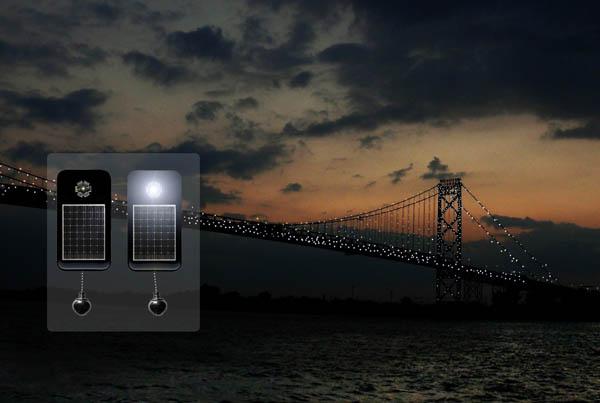
The above image was part of a proposal to utilize Firefly modules to create a solar-powered, wind-sensitive skin for the Ambassador Bridge in Detroit. Coupling the Bridge’s beautiful engineering with a stunning, large scale wind installation would make it one of the most striking pieces of public art and architecture in the world.